Monday, August 24, 2026

Greed had infested my soul. Now I’m trying to salvage what’s left.


I recently had an uncomfortable conversation with an old friend. We’ve known each other for 10 years now, during which time we have been in touch sporadically. 


The morning we met, I was barely holding myself up. In my lonely journey of making my own path* I was already bogged down by the tough market, writing work that had steadily dried up over the past couple of years, and a fatalist outlook that I was in a dying profession. 


My friend is running a successful startup. Every time we have met over the last few years, she has hinted that I should return to full time work. Each time I have resisted, faking that my freelance career was doing so well, I didn’t need a full time job.


This time, when she brought up the same, beat up argument about full time work being “real” work, I broke down. 


It is hard not to be earning as much as I used to, even when I’m working 5x harder. 


What made this difficult situation almost unbearable (and unfathomable to her, I imagine) was that if I wanted, I could have gotten a marketing job yesterday. One that paid better than all the income from all my writing years combined. 


I left marketing for writing in 2021 because I enjoyed writing and I didn’t like the kind of marketing I was expected to do when social media exploded. I felt that businesses were breaking unsaid moral mores, all for more revenue and because “everyone else is doing it too! So why not us?” This sounded eerily like what Wall Street would have told itself as it shattered the American housing market and brought the world economy to its knees in 2008. 


Marketers haven’t triggered a market collapse yet, but short term practices have eroded consumer trust and touched a new low in “click bait-y” content, in my opinion. But that is for another post. 


Shifting careers calmed my soul but barely added to my earnings. I’ve spent as much time getting more and more creative with economising as in finding new writing work. To say that the last five years have been a grind would be an understatement. 


Still, I don’t miss corporate enough to want to go back to it. I really didn’t like who I had become when I was working for someone else. In the Jekyll-Hyde equation, corporate-me was Hyde all the way. 


There were many things I didn’t like about that version of me, but the one quality I still think about and shudder is how greedy I had become. In business speak, this would be called “ambitious”.   


Of course, both traits have nuances, and being ambitious isn’t bad. What is bad is the corporate tendency to misuse words that are slightly different in meaning, like deliberately blurring a clear picture. 


So impossible situations become “challenges” to be overcome one way or the other, and morally ambiguous decisions become “tough calls” that are taken for the “good of the business”, or even better, “because of market forces”. 


This is just another face of greed.


The kind of marketing I would have done if I hadn’t left when I did personified greed to levels of horror that terrified me in imagination itself. 


In addition to this I resisted bending into all kinds of shapes to suit the boss’ or the company’s mission. Not doing this cost me multiple bonuses and promotions. 


As my boss’ boss once told me, “Your work ethic is coming in the way of your growth.” 


Greed. The Bible calls it “an immoderate love or desire for riches and earthly possessions.” 


The Gita says it’s one of the three gates of hell, the other two being lust and anger. 


For me, fiction says it best. 


John Steinbeck demonstrates the power of greed to destroy a simple family in the allegorical tale, The Pearl. The infant son of a couple living a modest life in a shack by the sea falls dangerously ill. Unable to pay the medical bills, his father prays for a miracle and actually gets one. But no sooner does he possess the solution to his problems than their world begins to unravel. 


Thomas Mann’s masterpiece Doctor Faustus is the modern adaptation of the Faustian bargain, also known as a deal with the Devil. In Mann’s version, a composer swaps his soul with the devil for 24 years of unparalleled artistic achievement.+


Real life is nowhere as dramatic. Part of why we don’t notice evil growing in us is because this change happens inch by inch. By the time we take notice it would have changed us irrevocably; we’d have come too far along to backtrack. 


At a 2008 event with MBA students, Warren Buffet says this about correcting terrible behaviour early, “You can do it if you are your age, you can’t do it if you are my age. Basically these habits are built into you, by the time you are 60 it is too late to form them and they are too heavy to be broken.... If you are thinking about how to cause pain for somebody else rather than creating a situation that benefits yourself you are going to get a terrible result over time.” 


A common corporate fallacy is believing that you can do whatever you have to and move up the ladder now and always backspace selective parts of you and become your old self again later. Because going against your values, ethics or morals now to grow through the ranks does not make you a bad person. It makes you ambitious, a go-getter, a hustler! 


You tell yourself, you can always do what you want once you get to the top. What you don’t realise is that every time you let go of what is right, every time you do something because it’s in the best interests of anyone other than employees or humanity, you also let go a sliver of your soul -  the beautiful, immortal, precious part of you that makes you, you. And so by the time you reach the artificial pinnacle, by the time you’re at the top of this stinking pyramid, there isn’t much of the real you left. You’ve discarded them on your path upwards, like empty packets of energy bars, like waste matter. At each of these times, you had to throw a part of yourself away because you couldn’t have done what you did, moved forward otherwise. So you rationalised selling yourself. Now you’ve got a great view and you’re rich, but you’re also lonely, unhappy and caught in a vicious circle of your own ambition. You barely recognise yourself. 


Some of the richest people on the planet today are terrible human beings who even pride themselves on their inhumanity. Warren Buffet is a famous exception. But it’s very easy for Warren Buffet to tell us to be nice, you might retort. The man is 95 and a billionaire. He can afford to be nice. He doesn’t have insane sales targets, a sour boss or worry about paying his bills. 


Forget the billionaires for a minute and ask yourself, how much money would you need to live a comfortable life? If you make a rational, objective calculation and you aren’t under massive debt or in an expensive medical situation, it’s not very much. You definitely don’t need billions. You don’t even need a million. 


I don’t know how to work in a soul sucking job while keeping yourself intact. When I came to the fork in my path I took the easy way out and left. Now I’m trying to find a path to earning and living that nurtures whatever’s left of my soul. I still haven’t found it yet. But I’m happier than I’ve ever been. 

                                                "I got my ticket for the long way round."

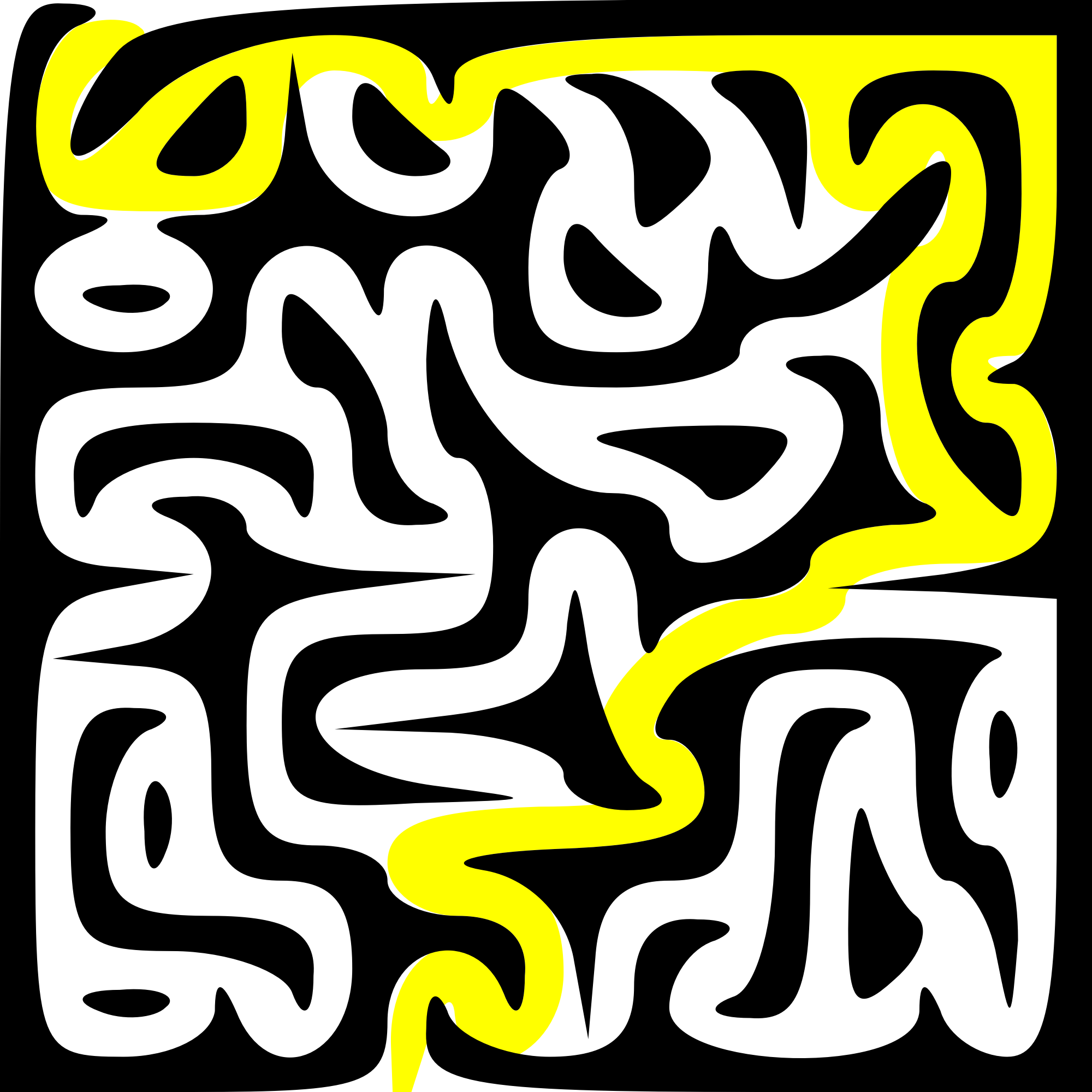
Image: a multicursal maze puzzle - one with multiple ways from the entrance to the exit. The challenge is to find the shortest way possible 

I know one more thing - what makes you, you is the most precious part of you. It’s one of those things that once you lose, you cannot get it back. Not fully, not the way it once was. At best it will be the hollow ring inside every time you wonder about the purpose of your life. At worst, it’s the performative slather of empty gestures and shallow platitudes that look like you have a soul, when you actually don’t. No one is fooled, least of all you. 


I don’t want to be 95 and rich, if that means I’ll also be bitter, angry and full of regret. Regret is a poison as bad as greed. If this means that I have to struggle for another 5 years trying to find my sweet spot, that’s fine. I’ll put one foot in front of another, take each day as it comes.  


"Only by listening to the voice of the soul — a voice by definition nonconformist, rising above the din of convention and expectation and should — do we become fully and happily ourselves. To be aware of ourselves is to hear that voice. To be content in ourselves is to listen to it." - Maria Popova, on the soul


*”The pathless path is an alternative to the default path. It is an embrace of uncertainty and discomfort. It’s a call to adventure in a world that tells us to conform. For me, it’s also a gentle reminder to laugh when things feel out of control and trusting that an uncertain future is not a problem to be solved.”  - The Pathless Path, by Paul Millerd


+ Both Steinbeck and Mann recos are from the book 'The Novel Cure:An A-Z of Literary Remedies', under 'Greed' and 'Selling your soul', respectively. 


Thursday, March 11, 2021

I Want the World to Change, but What about my Home?

The irony of my armchair feminist stance slapped me in the face for the first time late 2019, during one of my fortnightly sessions with my therapist. I have been a self-proclaimed champion of gender equality since I was in college, fondly called ‘krantikari’ or ‘feminist’ by men, depending on their opinion towards my stand. (In case you were wondering, the ones who called me a revolutionary believed in the principle - of gender equality - so long as it didn’t change their lives, and the ones who called me a feminist were making a mental note to (a) avoid such topics in future when I was around, and (2) NOT marry one, if they could help it).

My cook, who had been working for me, as of 2020, for around two years, called one day to ask for a day off, because there was no one to watch her children, aged 14 and 5. “The elder one will be fine by himself, akka,” she explained, “but many younger son doesn’t eat if neither me nor my mother is at home with him.” On further probing she said that her mother, who usually watches her sons while she works as a cook for multiple households, had left for their village without a specified return date. 

I didn’t look forward to cooking for an indeterminate period of time, because along with working  part time, I had an energetic three year old daughter. I was lucky to have gotten a job that suited my qualifications, and with flexibility in terms of time, and to some extent, in terms of the deliverables, too. However, I had been wanting to spend my out-of-work time in exercising, getting back in shape and kicking the PCOD out of my system. Cooking didn’t feature in my plans. And of course I was paying my cook, what the English would call, ‘a king’s ransom’ and I couldn’t possibly continue paying her salary when she wasn’t going to turn up for more than two days in a row. Right? 

One of my foremost reasons to not go back to the corporate grind post baby was the absolute lack of workplaces that were friendly to working mothers. Oh, sure, there is the perpetual WFH on paper, and a manager who merely sulks instead of yelling when you ask for a day off because your toddler is sick or needs to be picked up early from day care. But the reality is that organisations don’t know why they should do anything to help working mothers balance their professional and personal goals, and even if they want to, they haven’t fully figured out how. So rather than be treated like a semi-liability for having a child at home who needs me (and therefore a life outside office, duh), I chose to go my own way. It was a privilege, because my husband was working full time, and we had savings that enabled us to continue our present lifestyle even if I was not bringing in the big bucks. 

Any time anyone asked me why I didn't "get a job" they got this eloquently worded, assertive explanation. But when my cook brought her problem to me, I realised, for the first time in my life, that my household was a workplace too, for her. I also realised how difficult it was, both practically and economically speaking, to have a workplace that was truly adapted to working mothers and their unexpected pushes and pulls. If I, with a single household to run, couldn’t manage it, how can I castigate organisations for not trying, or worse, failing? 

Long term repercussions notwithstanding, I invited her to bring her son over the next time. My daughter was close in age, and one day when she was at home from school the two of them even played together amenably. On other days he would sit in the kitchen balcony and play games on his mother’s phone, while she cooked. All offers for snacks, or to play with my daughter’s toys when she wasn’t around were politely refused. Eventually my cook started leaving him at the security guards’ office at the gate rather than bring him upstairs into my home. 

There are several clashes of thought in this situation, from class-based prejudices to my cook’s need to demonstrate her professionalism by not bringing her ‘home’ into her ‘place of work’. In my opinion, none of them is unique to her situation. 

Covid-19 hit soon after, and with schools closed, not having a job to tend to whilst keeping the home running and a rapidly frustrated and lonely toddler engaged turned out to be a blessing. With life resuming some shades of normality these days, I tell myself I want to discover my own goals first, maybe try a few things, before going back to work full time. Starting with: a small scale example of successful enterprises by happy working mothers, maybe? 

Tuesday, November 24, 2020

WOMAN

The morns are meeker than they were - 

The nuts are getting brown -

The berry’s cheek is plumper -

The rose is out of town.

  The morns are meeker than they were, Verse 1, by Emily Dickinson


There are a great many things that you wish for, but once in a while, on one of those days, you really don’t want that morning. When you crack open your tired eyelids only the sun and the crusty lorry on the road outside seem to be bellowing with laughter. Big heaves: the former blistering hot, the latter, smoky black.

It isn’t till close to mid day, when you play a random video forward on your phone while waiting for your coffee to fill in the office cafeteria, that you smile. The real one, not the bland, social one usually reserved for others. You don’t want anyone to know that your favourite search phrase on YouTube is “laughing baby”. 

Your head hurts from the vodka of the previous night, but you suspect it has more to do with the unbearably forced conversation rather than an excess of alcohol. You laughed at their jokes once, especially the risqué ones. Ten years ago, as a curious, lusty, just-turned twenty, you had liked that they could be indecent and you could too, without actually saying it. You had been looking forward to a wonderfully flowing, cosy evening of good food, moderate drink, and lots and lots of laughter. Maybe that was where you went wrong - men are rarely known to grow up, and that’s why you have always been thankful that you didn’t know your husband when he was a teenager. 

Some hyperactive HR female has decided that the easiest way to meet her quarterly KRA, namely ‘employee productivity’, is to get the women to spend less time looking at themselves in the mirror in the toilets. Hence the poster - “THE SEXIEST CURVE ON YOUR BODY IS YOUR SMILE. FLAUNT IT!” Capitals written in pristine white, sans serif type, against a crimson red background, pasted strategically next to the mirror, a little above your eye level. You think then, that the men’s loo should have “THE SEXIEST SERVE IN YOU IS YOUR RESERVE. SO SHUT IT!’ But not near the mirror, please. 

You flash yellowish teeth at your dull reflection and remember a time. The only time, in fact, your mother called you “beautiful”. You might have been secretly smiling to yourself then, because at the rosebud age of sixteen, your long time crush had finally proposed, elevating you to that of a girlfriend. Since the precious deed had been done on a Saturday evening, and the motherly compliment was delivered to you the following morning, you had had to wait a whole day (and night) before breaking the news to friends at school. Of the proposal of course. The compliment had felt comparatively duh then.

You also used to be called “Miss Smiley” by friends, after your ready smile and engaging conversation. You loved to laugh. Not the trilling, musical, girly variety. The open-mouthed, full throated, belly rolling HaHaHa! You still have a child in you, your favourite professor at college had said, as ‘constructive feedback’ on why your masters application could have fallen through. 

Grown ups are serious, responsible people. So you grew a crust, rounded out, became measured. You massage your throbbing temples with your hands. Surreptitiously. Grown ups show cracks only at certain times of the day. Your phone pings and you see that the jokes of the previous night have received a fillip, for the worse. Grown up women showing cracks? Hardly ever. 

The brain fog lifts at around five in the evening, when the interminable day also settles into its downward curve. Heels clack, bags are rustled, phone calls are made. What the … ? “Women Only on Wednesday! Gastro Pub, 8pm onwards” screams the mailer in your inbox. They really need to stop using red. 

The prospect of driving in horrendous evening traffic, going home, changing, and then shimmying into an Uber to the ‘party’ in question wrings a grunt out of you. You rest your forehead on your worktable, the cool surface soothing your hot skin somewhat, spurring thoughts into action.

When you lift your sapped out, warm head a few moments later, you send two messages. To the husband, because it was Wednesday, and to the girlfriend in whose name yesterday’s ruckus was created, to meet at the coffee shop next to Gastro for a tete-a-tete. 

Would you have preferred to have remained blemish-less? You had always assumed that mistakes, heartbreaks, low GPAs, silent rejections, broken relationships and missed promotions were part of every young adult-to-jaded adult trek. It’s easier to rail against the system, against yourself, rather than to do something about it. Another secret added to the List, right after “laughing baby”. For once you are relieved to be tired, because your mind does not rattle off all the things you should have done, didn’t do, cannot do; an exercise that you realise, in its absence, you have conducted for as long as you can remember. 

Another trip to the toilet to freshen up, and you wonder what happened to your laugh. If you tried, would it still be as fulsome? You rub your rounded belly thoughtfully. It growls back in response. This time in the mirror, you shrug at yourself and smile. What’s precious porcelain without the cracks from use, the chipped edges that mark your cup as singularly yours? You have what you have, and you are what you are. There’s no getting around it. You hunt in your perpetually expanding handbag, roll on some red lipstick, and mascara your lashes. First things first - food. 


The maple wears a gayer scarf -

The field a scarlet gown -

Lest I sh'd be old-fashioned 

I’ll put a trinket on. 

The morns are meeker than they were, Final Verse, by Emily Dickinson


Wednesday, March 18, 2020

It Hurts to be Right

I am used to it now, what I have decided to call The Curve of Belief. It starts with me proposing something, usually an idea that feels brilliant in my head on day 0, then enthusiastic the first time I narrate it to my immediate family. The idea sounds defensive when their eyes glaze over and they zone out while I am speaking. It becomes whiny and plaintive when I am encountered with what I consider to be irrelevant / stupid questions or even more idiotic suggestions that i should be working, getting a job, doing something useful, you know, rather than ... this


Time passes, months, sometimes even years. Then what I prophesied happens to pass, and said infidels tell me, "So, you were right." I smile. Because I would have moved on to the next Curve by that time. 

We are in one right now, don't you think? I don't believe that we need any more graphs than those that are already going around, or more reporting on the numbers of people infected with the covid-19 virus. Last Friday I declined to attend office and consequently skipped an important client meeting. This was my first project after a year of near-drought work (and money) wise, but when I called my employer that morning I was convinced about the severity of the outbreak, even though in India the infected numbers were in the low double digits. He was kind enough to agree to my wish, although he ended the call with an embarrassed laugh on how "people have pressed the panic button, yeah". 

Yeah. 

Five days later, here's what things look like in India: 


Source: India Today and covidout

As of writing this blogpost, the total number of covid-19 positive cases is reported as varying from 148 to 151 in India on 18 March.

Well, not bad, of course. More people are dying of it in Italy everyday than the total number of positive cases in India. Hurrah! Indian immune system ki jai! Go mutra zindabad! Filth and pollution, thank you! 

Except when you put it in a graph. 


And then you compare the shape of our graph to that of other countries.


Source: Worldometers.info

Most of them are ahead of us on this deadly bridge. A bridge would be an apt metaphor, because our line graph, which is right now as steep as a dreaded mountain face, should flatten out before it starts reducing (refer China and South Korea above). We are still climbing (like Italy and the US above). Which means: there's lots more to come, folks. 


Sure, these numbers cannot be compared, apples-to-apples. India's numbers may also not be indicative of reality, since we have opted to quarantine people at home and only test them if they show symptoms. We have ramped up our testing capability only recently, and the so-called Stage III of the spread, which is when it moves from people with a travel history to affected countries, out into the local community, to people who don't have a travel history or anything to do with the people found to be infected initially. But all this only underscores my earlier point that, in this case, there is a lot more we don't know - about the virus, about the extent of its spread, and its effects - than what we know. 

I probably sound ridiculous, with my over-righteous lectures and forwards about "social distancing", mostly over WhatsApp. Heck, I have even started practising social and emotional distancing at home; that's how ingrained this behaviour has become for me. 

I also know that I, and my immediate family (which is a rainbow of ages, from a toddler, to adults, to 80+ years old senior citizens and others with pre-existing health conditions) will also get infected. It's only a matter of time. All I want is to get there at the point when the curve has moved downwards, so that they can get admitted to hospital and therefore get the critical care they would most definitely need. Hopefully by then the number of recoveries would also be robust, giving all of us, along with all those who might have contracted it from us, some hope. There is no bigger regret than a tragedy that could have been avoided, but was not because we believed in our genetic immunity, the unhygienic conditions our bodies have adjusted to and the legendary powers of cow pee. I am no analyst, biologist, doctor or an expert on anything. I like to read, to think about what I read, and to understand how it may / can / would apply to me and my life. 

This is my take. 

Note1: The extensive Medium article that convinced to work from home last week.

Thursday, February 14, 2019

For of a Truth ..

For of a truth, in these days of independence, of pushing and striving among all ranks and sexes, the gracious old-world flower of gentleness runs risk of being trampled out of feminine character: the more so, because it is a common fallacy to confound gentleness with weakness; whereas true gentleness is the handmaid of strength though not of self-assertion. For strength has any forms of manifestation, and the ideal woman of the East is strong in self-repression, in cheerful subordination of the individual to the community: since an Indian household is still a community on the old patriarchial lines. She is the outcome of an ethical, if not a material civilization. Analysis of the seemingly arbitrary conventions that dominate her life reveals an underlying canon of stern self-control; just as analysis of her rigid religious observances reveals a faith permeated with the poetry of symbolism. 
Maud Diver, The Englishwoman in India, 1909

The more things change, the more they remain the same. 

Monday, January 14, 2019

Morning

The older you get, the fewer your comforts become. Drinking into the night and binge watching TV no longer helps you forget a bad day or to practise ceasefire from a domestic fight. The sharp edge of survival propels you inward, and you end up deriving sanity from small, harmless acts.

Right now that is your morning cuppa. Usually it is coffee, and it makes you feel grounded, the rising plume of steam from the cup creating a whitespace that calms. On other days it highlights the choppy waters that your uncontrollable life has become, prompting you to prolong that pause just a little longer. You also recently rediscovered the beauty of froth. Being hemmed in by the few minutes to yourself before the rest of the house - man, child, dog and the cringe worthy doorbell - awakens and trudges around demanding things, you are hyper focussed on that mug. With your brew in it. In the morning. It’s 6am and the night sky is wrestling with the day, slowly losing its midnight black colour to a conciliatory chalk grey. Standing against your spotless kitchen counter gleaming black you watch, head bent into your plain white ceramic cup, mesmerised. The placid surface of water the colour of dirty mud comes alive to the thin stream of hot milk that descends on it, creating tiny, perfectly circular bubbles, just one or two at first, moving this way and that, then more and many more, banding together to create a layer, layers of anticipation, all the while turning the concoction into a rich, fulsome brown. The brown of thick tree barks, with their age old wisdom, branches dancing to the breeze and sheer solidity. The brown of a milk chocolate bar, never mind that it actually has more sugar than chocolate. The deep brown of the labrador across the street, its tail wagging and perpetually wet tongue dripping saliva over your exposed toes as you rub him on his neck. 

Your fingers are cold and stiff from clutching the thick handle of the milk jar, a larger version of the cup in clear pyrex glass. They wrap around your mug, and the warmth seeps in immediately. You lift it and straighten up, the weight of your toil pleasurably heavy in your hands. As cup meets lip, the froth tickles, bubbles bursting into frivolity. So carefully created, so easily burst. A few more careful sips, this time your tongue feeling more confident, and the warmth spreads down your chest in a careful line of heat, gently pooling in your stomach. You flex your  chilled toes, wishing that they could get some coffee too. The smell of coffee is everywhere in the kitchen now, it’s hugging you and you lean in, wanting more, needing more. It is no longer small, or harmless. It’s a good morning and it’s almost everything that you will do for the rest of the day. 
It wasn’t always this way. Mornings used to be unrelenting, the cunning light cutting through the drawn curtains to prick your blissfully closed eyelids, forcing them open. Or your mother’s voice, booming like a drumbeat in a closed room, bouncing off the walls in her house and slithering under your door, “Wake up, you’ll be late for school!” They used to be cruel during the years you stumbled out of your room in a tiny flat in the city, eyes half shut, stubbing your toe on the raised edge of the toilet (we did it to keep the overflowing drain from ruining the house, you know, the landlady had explained practically) on your way to brush your teeth. Then rushing out thirty minutes after, late for the train and later for work. 

Now they are in hand, the mornings. Not because of your age, or because it’s a particular day of the week, or the fact that you consider five hours of sleep a luxury. But because, as the house wallows in chaos and the sun peeks through the clouds, you have a rite that creates it just the way you like it.

My Parenting Goals for 2019

A friend asked to pen something down for an upcoming blog, and I said yes, because I would never refuse an opportunity to write. 
---
My single parenting goal for 2019 is to - 
Stay Calm and Be like a Wave in the Ocean of Life

As a full time mom to an energetic and eternally curious 15 month old, the first part of my resolution is virtually impossible. Nevertheless, it is there to remind me that the only thing constant about overwhelming days and sleepless nights is just that – more overwhelming days and more sleepless nights. I like to think of myself as a recently reformed control freak and micro planner, so my new (non-) plan for 2019 is to let the day take me along, rather than me dragging the day and my screaming baby along a path that is supposedly the ‘right’ one, but which neither of us wants in the first place. 

Schedules and routines notwithstanding, I want to allow for more unstructured exploration, both for my baby and me, be it spontaneous outings to the park, new games that can only be played with kitchen vessels (if I am doing so much with it, my baby thinks, it must be an interesting toy right?) or doing “just enough” housework rather than creating a perfect home with gleaming surfaces and everything in its place.  

To a child each day is a fresh start, an empty canvas to create for herself any picture that she fancies. In 2019, I want to be like her, approaching each day with a deep breath and a blank slate, watching it ebb and flow like a tiny wave in the giant ocean.
---

I did it. Called myself a full time mom, and wrote it down also, because let's face it, when I had the chance to postpone a few things off my back, this is what I kept - the baby care. I am actually somewhere in between full time mom and mom figuring out what she wants to do, but it's an 80-20 right now. 

I have also pledged to reform my perfectionistic tendencies by choosing where to apply them, and so far it seems to be working beautifully. I don't remember the last time I cleaned my dining table, and I took a 1.5 hour nap in the afternoon yesterday. Because I felt sleepy. 
---

I am happy to share that a part of my writeup got featured here